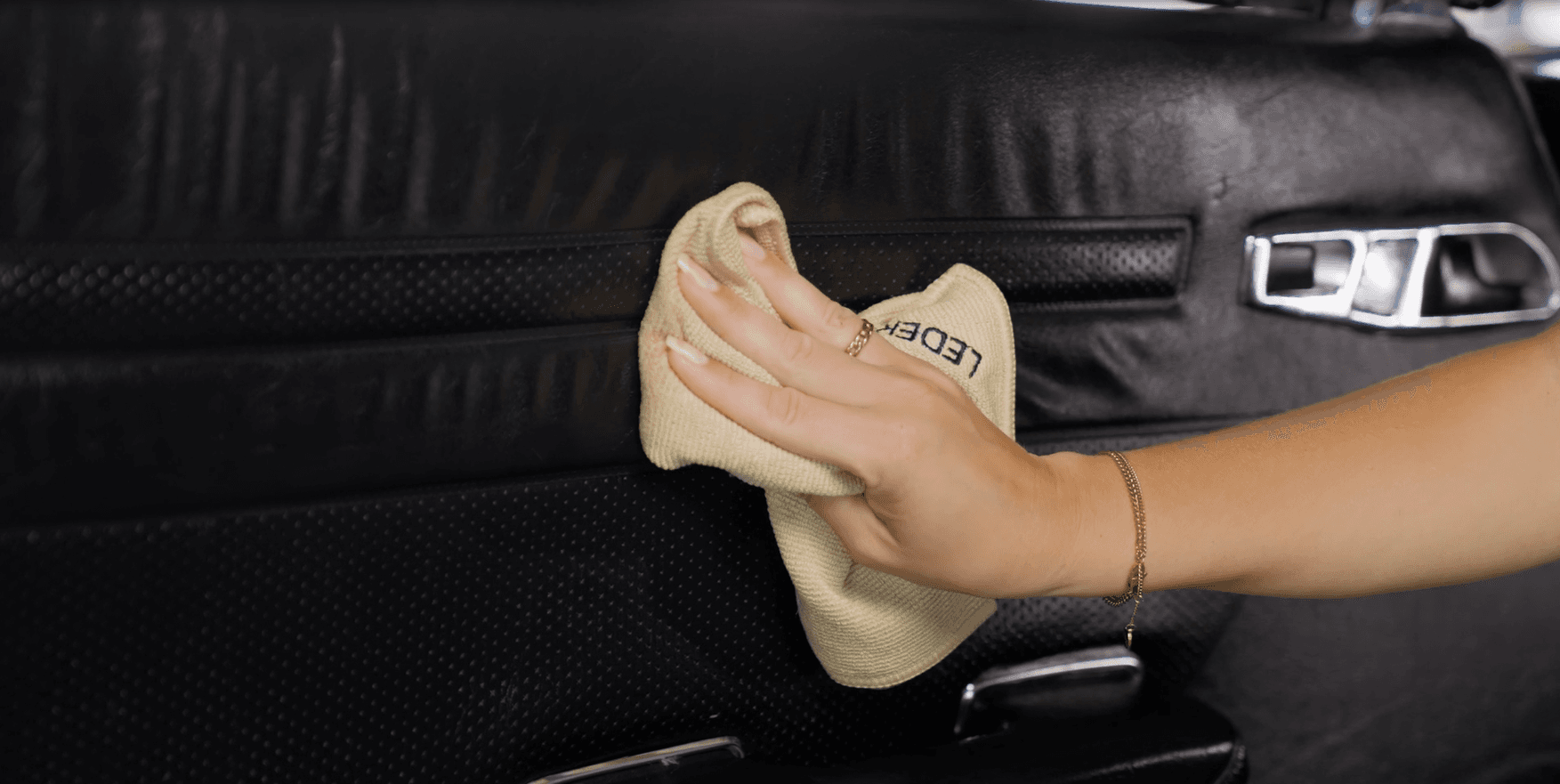
How leather suffers in the cold — and how the right care keeps it looking great
Leather in a car stands for quality, comfort, and aesthetics. It feels premium, has a distinctive scent, and underlines the demand for design and lasting value. But it's during the cold season that this natural material shows just how sensitive it can be. Leather care in the car isn't optional — it's a decisive factor for longevity, looks, and resale value.
Dropping temperatures, dry heated air, and sharp temperature swings put serious stress on leather. The material loses moisture, becomes brittle, and can crack more easily under load. Heavily used areas like seat bolsters, the steering wheel, or armrests are hit hardest. Skip targeted leather care in the car here, and you risk irreversible damage — both visually and functionally.
Cold strips leather of its natural elasticity. At the same time, dry cabin air dries out the surface. Micro-cracks form invisibly at first, then quickly grow under mechanical stress — for example, getting in and out of the car. This is exactly why thoughtful leather care in the car is more than just cleaning: it protects, nourishes, and preserves suppleness.
How cold structurally changes leather in your car
To apply the right leather care in the car, it helps to understand the material itself. Leather is made up of a complex fiber structure. Those fibers need balanced moisture to stay flexible. When the cold disrupts that balance, the material loses its resilience.
In winter, several stress factors come together:
- Temperature shocks: an ice-cold car gets heated up dramatically within minutes.
- Dry heated air: it continuously pulls moisture out of the leather.
- Moisture from snow or wet clothing: water gets carried into the car and creates tension as it dries.
- Mechanical stress: thick winter clothing increases friction and pressure on the seats.
Without targeted leather care in the car, these factors lead to visible changes. The leather looks dull, loses color depth, and feels rough. In extreme cases, cracks form or the coating starts to flake. Light-colored leather is especially sensitive, since dirt shows up faster and aggressive cleaning attempts can cause additional damage.
Leather care in the car therefore rests on two principles: cleaning and re-oiling. Cleaning removes dirt particles that act like sandpaper. The follow-up care then delivers the right active ingredients to boost elasticity and resilience. Innovation here means developing care formulas that work deep down without sealing the surface or leaving it greasy.
The right leather care in your car: step by step
Effective leather care in the car follows a clear sequence. Work through it methodically and you'll get better results — and noticeably extend the life of the material.
1. Prep and cleaning
Every care routine starts with a thorough cleaning. Vacuum dust and loose dirt first. Then apply a leather cleaner. Important: don't use household cleaners — they attack the surface. Leather care in the car always starts with a product developed for automotive leather.
2. Gentle drying
After cleaning, let the leather dry completely. Avoid direct heat sources. Patience pays off here — leather care in the car only works at its best on a fully dry surface.
3. Care and protection
Now apply the leather conditioner evenly. High-quality care products absorb in, nourish the leather, and restore its suppleness. They don't leave a greasy film — they leave a natural finish.
4. Consistency
Leather care in the car isn't a one-time project. In winter especially, apply care every two to three months — more often with heavy use. Consistency prevents damage before it starts.
Common mistakes in leather care
Even with the best intentions, the same mistakes come up again and again with leather care in the car. Long-term, they can do more damage than skipping care altogether.
A common misstep is reaching for household items like wet wipes or all-purpose cleaners. These often contain alcohol or aggressive surfactants that dry out the surface. Leather care in the car needs specially formulated products that are pH-neutral and respect the material's structure.
Using too much product can also be a problem. Leather has to breathe. An excessive layer blocks moisture exchange and leaves a sticky surface. Professional leather care in the car relies on the right dosage and even distribution.
Another mistake is neglecting the high-wear zones. Seat bolsters, the steering wheel, and the shift knob need special attention. This is exactly where regular leather care in the car decides long-term resale value.
Leather care as an investment in resale value
If you love your car, you think long-term. Leather care in the car is a key factor for resale value. Well-kept seats signal care and pride of ownership. Cracked or faded leather, on the other hand, leaves a bad impression — regardless of the tech or mileage.
Aesthetics aren't an afterthought — they're core to the brand. Well-maintained leather creates recognition, trust, and a sense of quality at first glance. Leather care in the car preserves more than just the material; it preserves character. It makes sure design, comfort, and quality stay tangible over the long haul.
At the same time, leather care in the car serves a clear functional purpose: protection from UV radiation, reduced wear, and preservation of the material's structure. Modern care formulas combine cleaning, conditioning, and protection in smart design. Innovation here means creating products that deliver real, visible, tangible added value.